
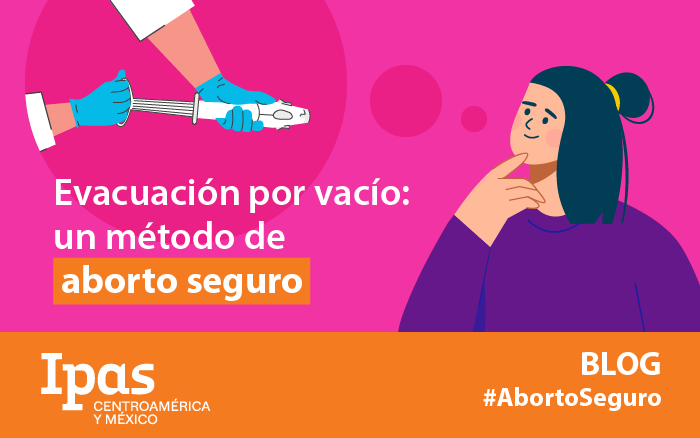
There are two ways to access safe abortion procedures: one is with medication and the other is through vacuum evacuation, which is performed with gentle aspiration. Both are methods recognized and recommended by the World Health Organization (WHO) and the International Federation of Gynecobstetrics and Obstetrics (FIGO) for their high rates of effectiveness and safety in terminating unwanted or unplanned pregnancies.
Despite being a highly effective option, vacuum evacuation is little known by women and adolescents seeking to terminate pregnancy safely. In this blog we will share quality information about it.
Before going into details, it is important to remember that it is ideal to be accompanied by a trained person who can guide you on the best method for you, based on: number of weeks of gestation, state of health, access to medical services, availability of equipment and medications, trained health personnel and your preferences.
Now it is.
Uterine evacuation by vacuum occurs through a gentle suction technique using two types of equipment: the Manual Uterine Evacuation Device (MVA) or the Electric Uterine Evacuation Device (EVA).
Vacuum aspiration consists of extracting the contents of the uterus by means of a flexible tube (cannula) inserted into the cervix. The equipment – manual or electric – generates the suction necessary to remove the product.
This method is considered by WHO and FIGO to be modern, versatile, safe and effective, provided it is performed by trained personnel and with proper equipment. When performed correctly during the first 12 weeks, abortion is complete in 98% of cases. In fact, MVA is the procedure of first choice for both organizations.
Among the main advantages of MVA are that it does not require hospitalization, does not require general anesthesia, and termination of pregnancy can be confirmed at the end of the clinical maneuver. In addition, the risk of uterine perforation, cervical injury and hemorrhage is very low.
Another benefit is that you can start a contraceptive method – such as an IUD or subdermal implant – immediately after the procedure if you wish. Once the vacuum aspiration is complete, the health care provider must notify you and inform you that he or she will proceed with the placement of the contraceptive method of your choice.
The abortion procedure is different for each person; in some cases it may cause pain. Local anesthesia and oral or intramuscular analgesics are used to prevent or manage pain. You will be able to agree on a pain management plan with the expert in the technique.
Upon completion of vacuum aspiration, you will remain under observation for a period of time. You will be able to leave when you meet the criteria for medical discharge and, most importantly, when you feel safe and ready to leave.
Previously, a technique called uterine curettage was used, but it is no longer endorsed by the WHO due to its complications. Currently, MVA abortion is the technique that replaces it because it is safe and beneficial.
Vacuum evacuation, by MVA or UVA, can be performed in first level clinics or units or private practices. To learn more about the vacuum aspiration procedure, please visit:
MVA What is it? Procedure Manual – YouTube
MVA abortion is a safe option that provides for the well-being and health of those who choose it.
Recent Comments