
One of the questions we receive most frequently is about the safety of the medical abortion procedure: is it safe, how effective is it, what are the warning signs, what is the correct dosage, among many others.
These doubts come mainly from women and other pregnant women, but also from health professionals, including those who provide abortion services.
Here we are going to share with you up-to-date, evidence-based information documenting the safety, efficacy, characteristics and low risk level of medical abortion procedures when accurate information, quality-assured medications and access to health services, if necessary, are available.
The drugs that have been used for several decades for medical abortion are misoprostol and mifepristone. Both drugs are endorsed and recommended by the World Health Organization (WHO) and specialized national and international organizations, such as the International Federation of Gynecobstetrics and Obstetrics (FIGO).
Recently, the WHO issued a recommendation to all countries to include these drugs in the List of Essential Medicines to be provided by their health services.
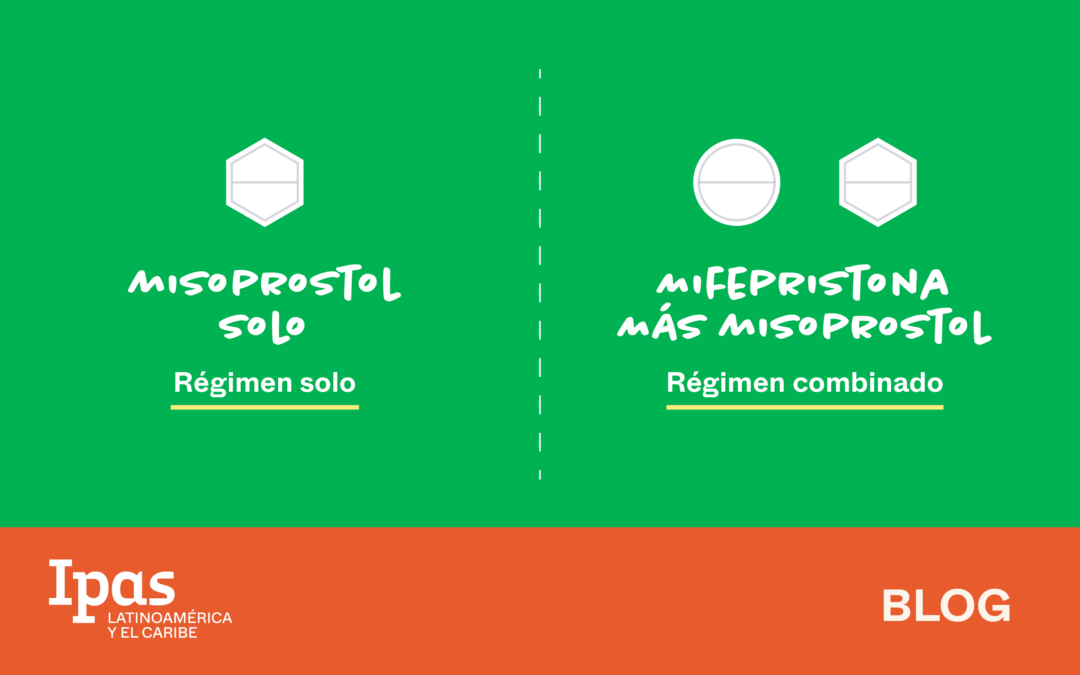
There are 2 recommended schemes:
1. Mifepristone combined with misoprostol
Misoprostol alone
Unfortunately, mifepristone is not available in all countries in the region; therefore, the use of misoprostol alone for medical abortion is more common.
Misoprostol is available for purchase in most pharmacies under various trade names, and its sale is not usually conditional on the presentation of a prescription.
For the misoprostol abortion scheme, take into account these indications:
- Its efficacy rate ranges from 84% to 96% when used correctly.
- It has pregnancy continuation rates of 3% to 10%, and complication rates of 1% to 4%.
- If you only have access to misoprostol, you should make sure you have at least 12 misoprostol pills of 200 mcg each. It is usually necessary to administer 3 doses of four 200 mcg pills 3 hours apart, i.e., administer four pills, wait 3 hours and administer the next four pills, wait 3 more hours and administer the next four pills.
- You may require an additional dose of misoprostol if bleeding, cramping or expulsion of debris has not occurred after at least 3 hours since the last dose of misoprostol. This additional dose, like the previous doses, should consist of four tablets of 200 micrograms each.
- The routes to administer misoprostol are: sublingual (under the tongue) or between the cheeks and gums two pills on each side (this route is called buccal), let them dissolve on their own; wait 30 minutes and swallow the residue with water.
- You can also use the vaginal route for misoprostol (some countries have this presentation): you insert the tablets through the vagina with your fingers, as deep as possible, then you must remain in a horizontal position for 30 minutes until the tablet melts.
- In countries where access to abortion is restricted, it is not recommended to administer them vaginally, as traces of the pills may remain after several hours.
- For pain you can take ibuprofen 30 minutes before the first dose.
If you require more information on the correct use of misoprostol, we invite you to watch the following video: Safe abortion with misoprostol
In the case of safe abortion with mifepristone and misoprostol before 13 weeks, these three steps must be followed:
– Step 1: Swallow one mifepristone tablet (200 mg) with water.
– Step 2: Wait 1 or 2 days (we recommend 24 hours) before administering misoprostol pills.
– Step 3: Place 4 misoprostol tablets (200 mcg each) either under the tongue (sublingual route) or between the cheeks and gums, two tablets on each side (this route is called buccal); let them dissolve on their own, wait 30 minutes and swallow the residue with water.
Take into account these recommendations:
– You can also use the vaginal route for misoprostol (some countries have this presentation): you insert the tablets through the vagina with your fingers, as deep as possible, then you must remain in a horizontal position for 30 minutes until the tablet melts.
– You should know that in the vaginal tract the residues of the pills can be detected even several hours later. It is not recommended to put misoprostol in the vagina if you live in a place where abortion is legally restricted, since in case you go to a medical service for a check-up you may face questions.
– If 24 hours after using misoprostol there is no bleeding, you should consult a safe abortion health care provider.
When the pregnancy is developing outside the uterus is called “ectopic pregnancy”, this is a rare condition, but can endanger the life of the woman or pregnant person. If you have or suspect an ectopic pregnancy, you should not take medication to abort; you should go to an emergency health facility so that you can be attended immediately and not complicate your health.
– In the case of ectopic pregnancy, the use of abortion medication will not terminate the pregnancy.
– Shooting pain (like being stuck with a needle), especially on one side of the lower abdomen, may be a sign of ectopic pregnancy. This type of pain is not related to the use of misoprostol.
– If for any reason you have already taken abortion medication and you discover that you have an ectopic pregnancy, you should immediately go to a health facility.
If you are over 13 weeks, it is advisable to perform the procedure under the supervision of a health professional properly trained in abortion care, as you may require more doses of the medication.
The abortion procedure is permitted in several countries in the region for different reasons, depending on the country’s penal code. If you want to know which grounds are allowed in your country, we invite you to check our website: abortoenmipais.ipaslac.org.
Remember that public health services are obliged to attend all the cases contemplated by the law in force in each country. If you have any doubts, write to us at [email protected]
Recent Comments