Resources

We produce a wide range of materials to help women and people with childbearing capacity to obtain quality, evidence-based information to help them make decisions about their reproductive health, in autonomy.
We generate materials for activists, advocates and reproductive health workers to expand access to high-quality abortion services.
For health professionals involved in the provision of services, including abortion care, we offer the latest clinical recommendations, workplace resources and training tools.
Decision-makers, stakeholders and academia can benefit from other research and policy-related materials. We publish research results, fact sheets, toolkits and much more.
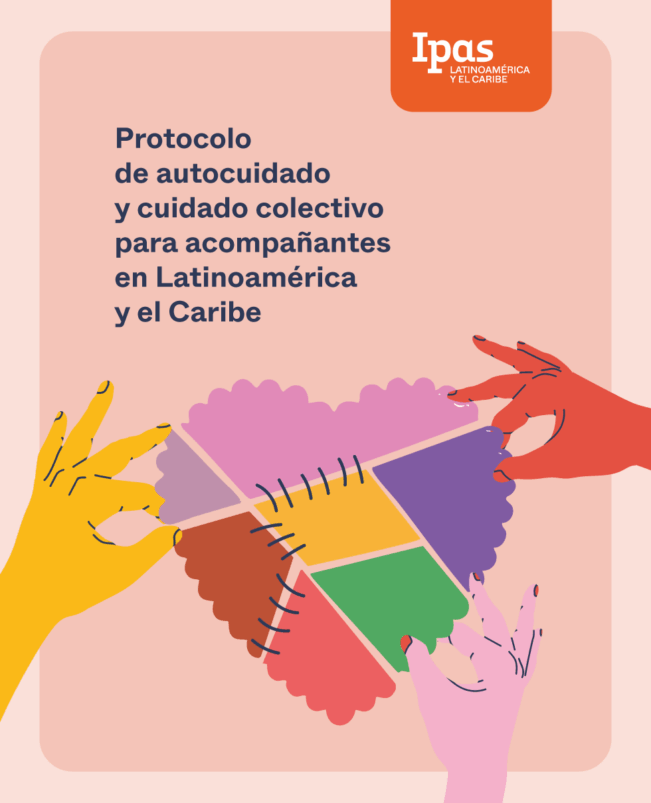
Restrictive contexts, such as those prevailing in most Latin American and Caribbean countries, and the social criminalization of abortion generate extremely difficult conditions for the networks of escorts, who face circumstances that put them at risk and criminalization, forcing them to exercise and defend their right to decide, often clandestinely. the right to decide, often clandestinely. For this reason, and with the purpose of supporting self-care, Ipas LAC has defined two important actions
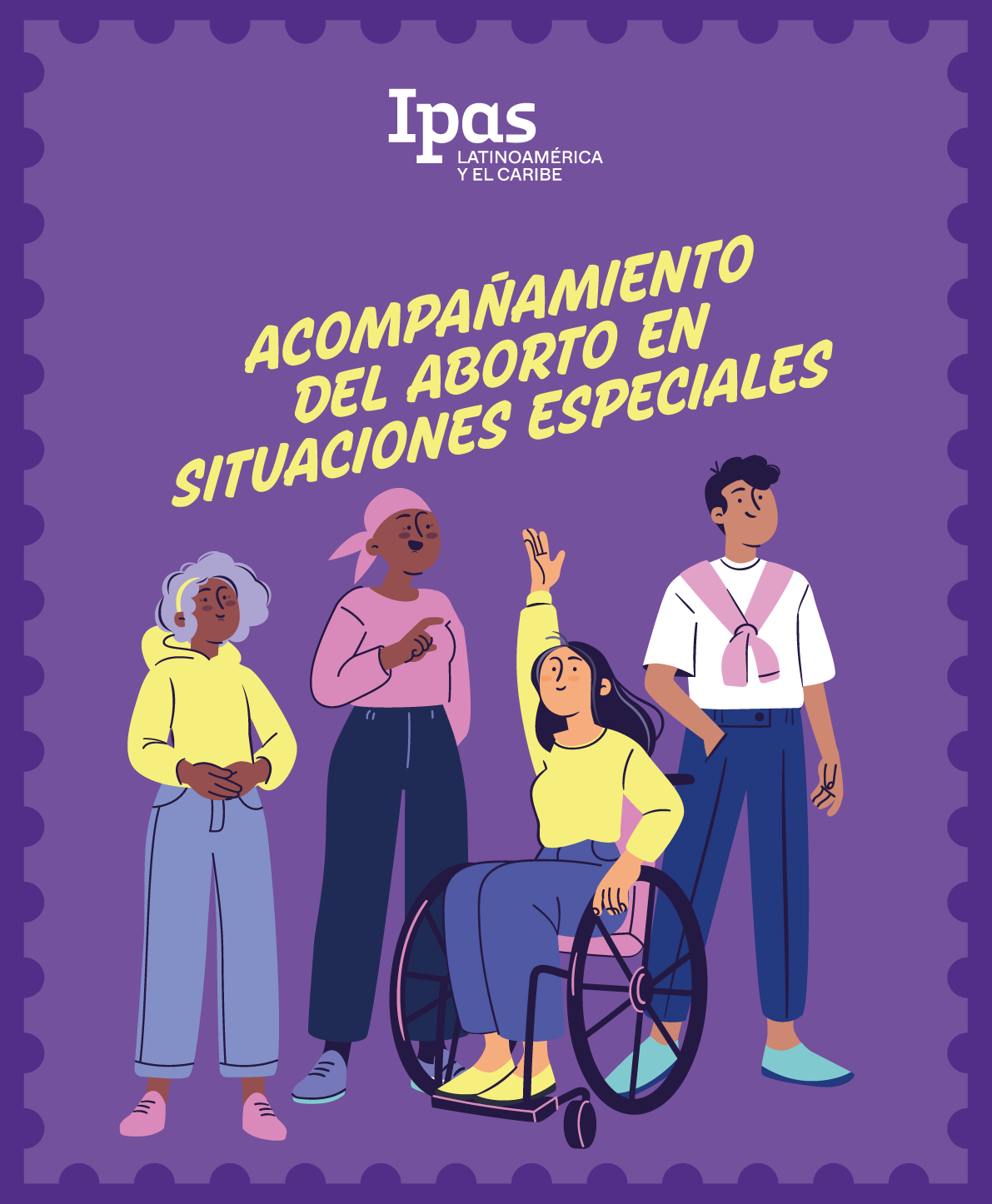
Abortion in special situations: a handbook for caregivers, in a condensed, practical and accessible version. This material was designed to facilitate access to reliable information on medical abortion in contexts that require particular attention, always maintaining an approach based on scientific evidence and human rights.
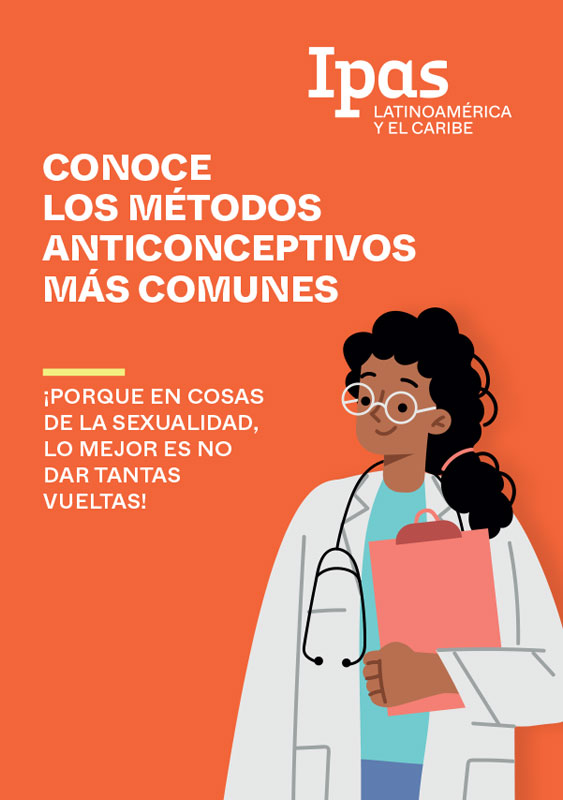
The contraceptive accordion is a practical, accessible and easy-to-read resource designed especially for young people and adolescents seeking reliable information on how to prevent pregnancy.
The contraceptive accordion is a practical, accessible and easy-to-read resource designed especially for young people and adolescents seeking reliable information on how to prevent pregnancy.
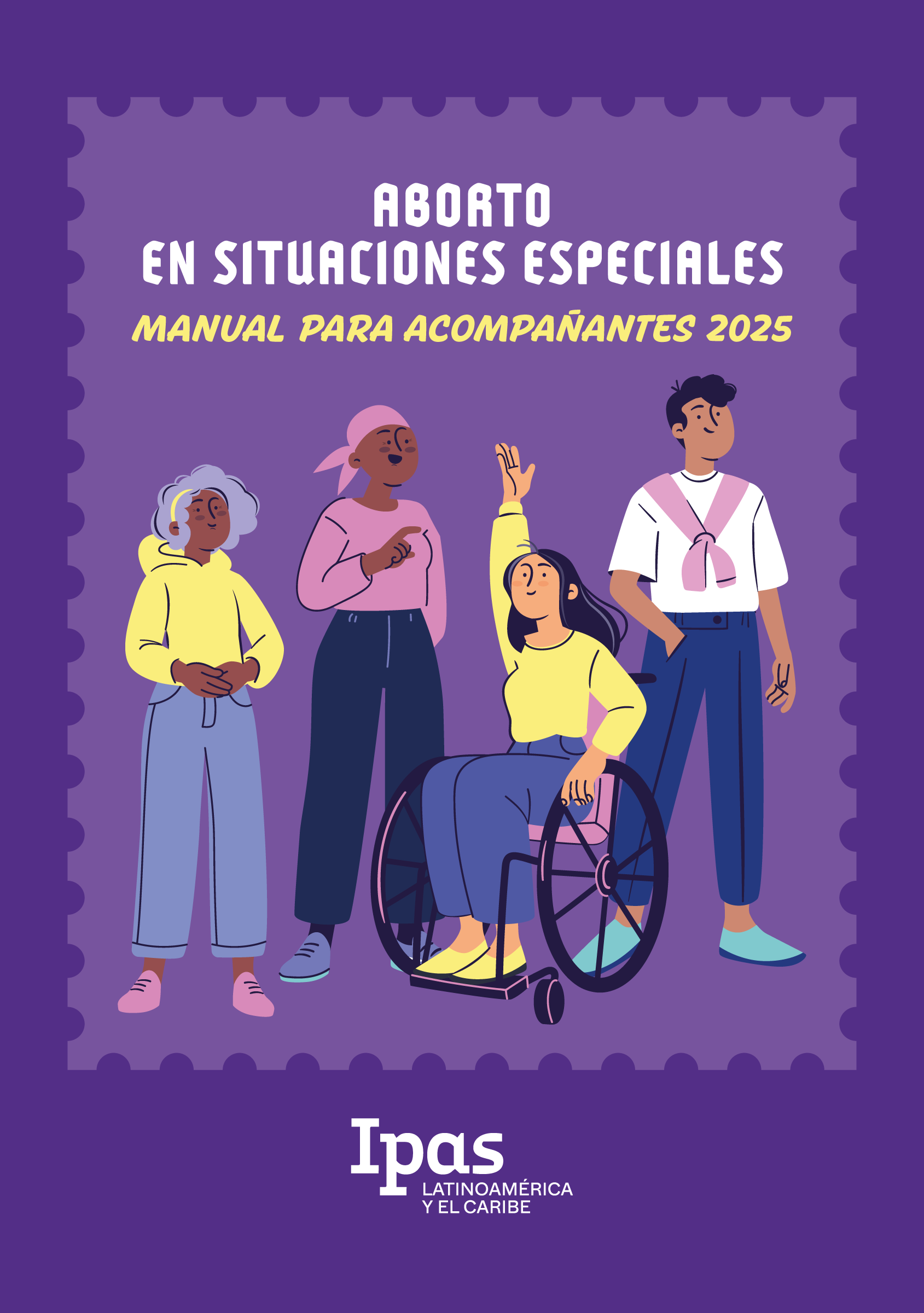
Evidence-based practical manual on medical abortion (misoprostol and mifepristone) in contexts that require particular attention, but do not contraindicate its use. Aimed primarily at abortion escorts in Latin America and the Caribbean, it also serves as a useful resource for health personnel providing safe abortions.
This Good Practice Guideline (GBP) offers conceptual and procedural guidelines for the care of induced abortion after 20 weeks of pregnancy, with an approach based on scientific evidence, quality of care and human rights. The document integrates lessons learned by healthcare professionals from different Latin American countries who work in the public and private sectors, as well as the experience of those who work with healthcare institutions. It was developed from a regional meeting held in Bog
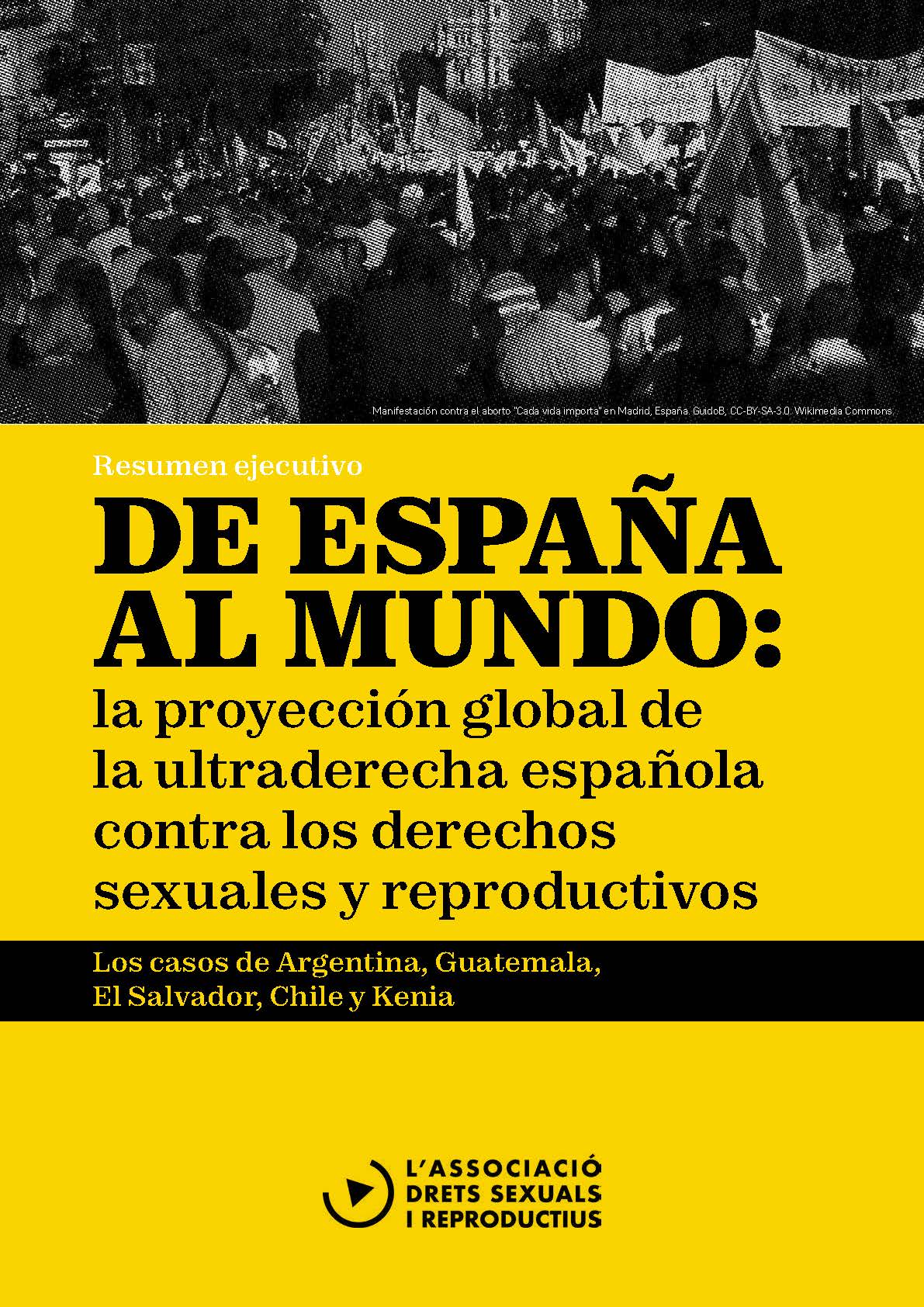
Study promoted by L’Associació de Drets Sexuals i Reproductius, which analyzes the role of Spain in the global diffusion of anti-gender policies and narratives. The document shows howvarious Spanish ultraconservative actors have articulated transnational strategies that impact Latin America and Africa, which has contributed to the growth of the extreme right andto the blocking of sexual and reproductive rights. This document analyzes the cases of Argentina, Guatemala, El Salvador, Chile and Keny
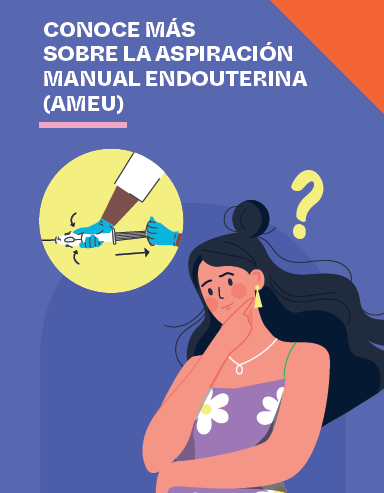
What is Manual Vacuum Aspiration, commonly known as MVA? Find out, in this easy-to-consult leaflet, what the procedure is like, what instruments are used, the medications recommended for MVA, how much it hurts and what to expect after the procedure. Download the publication in tri-fold format for printing at this link. Ipas LAC encourages public distribution and reproduction of all or part of this document, provided the source is acknowledged. In no case may this work be used for commercial purp
Learn about the legal framework of abortion in Mexico, in the downloadable card. With accessible information on the grounds for abortion by state and specific situations. For more detailed information, we invite you to also consult the Blog Causales legales para el aborto en México (Legal grounds for abortion in Mexico). See publication Back to Resources
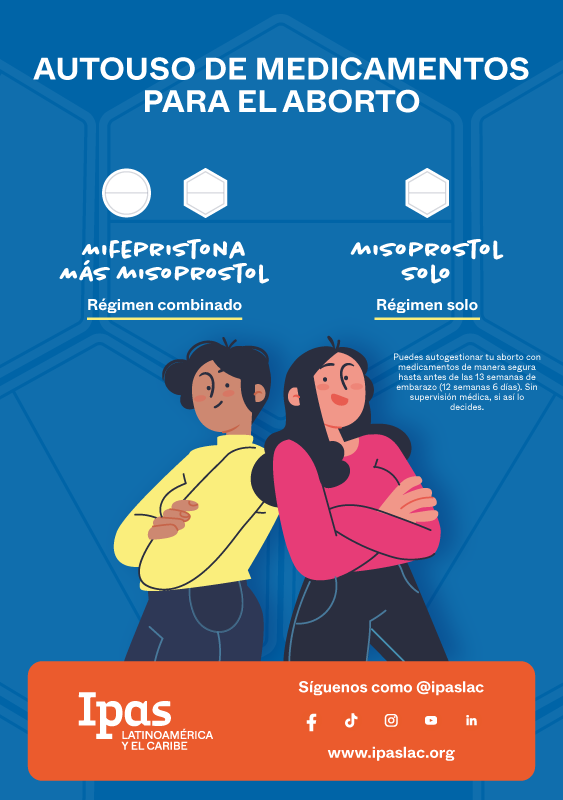
Explanatory card on the use of abortion drugs according to the World Health Organization’s recommendation and the most current clinical evidence. Accessibly, it contains information on misoprostol and mifepristone and misoprostol regimens. See publication Back to Resources
One of the relevant aspects to ensure quality health care is the adequate regulation of the prescription and use of the necessary drugs and supplies. The existence of a vademecum is intended to provide greater legal certainty to professionals and not to limit or impede professional practice in accordance with highclinical quality standards based on the available updated evidence. Vademecums are technical tools that require periodic updating. As a result of the analysis carried out by an interdis
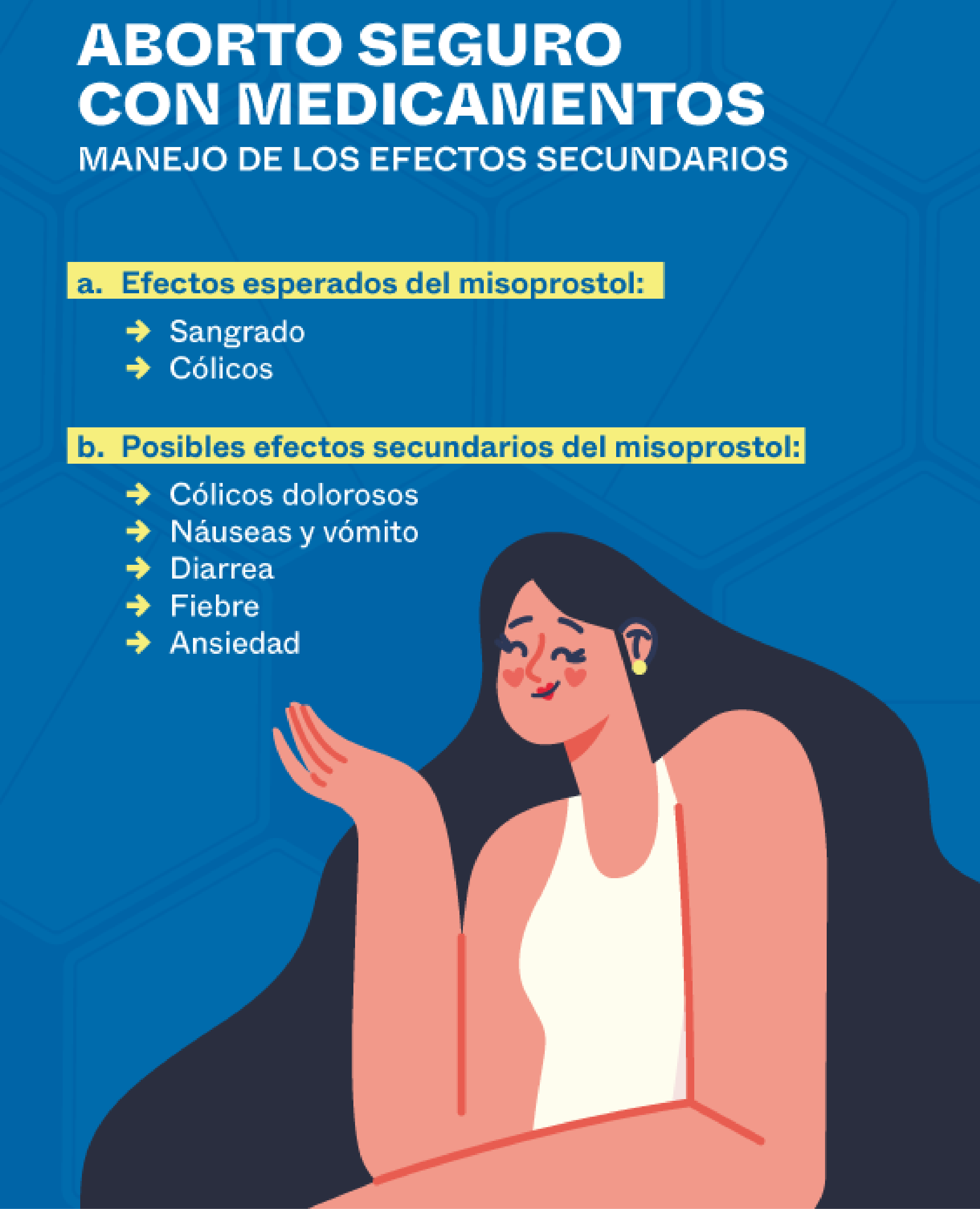
Self-care strategies and medications that help during the side effects of safe abortion medications are very useful, learn about them in this simple and didactic material. See publication Back to Resources

This publication addresses some of the most common myths that Ipas has documented about the care provided in public health services to adolescents and young people with unintended pregnancies. The goal is to contribute to reducing barriers to access related to misinformation and stigma associated with adolescent and youth sexual and reproductive health. Go to publication Back to Resources

Reproductive health decision making requires timely and accurate information. In this document we share data on Nicaragua, which can be considered in the elaboration of plans, programs and actions, and for making public policy decisions in the area of reproductive health. Go to publication Back to Resources

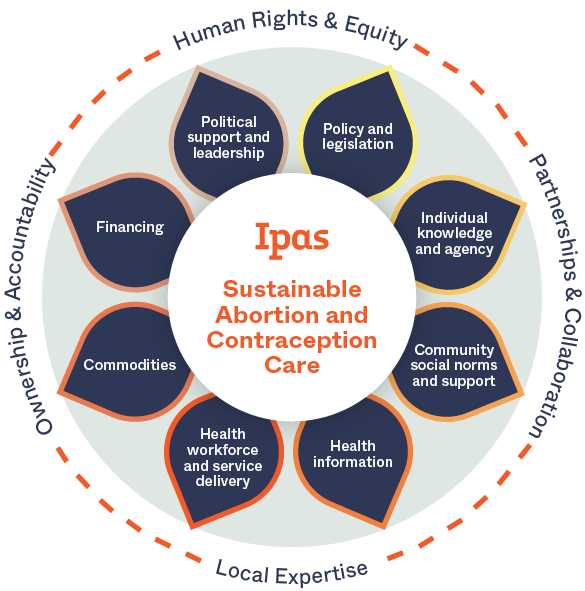
This sustainability framework is Ipas’s response to Ipas to the urgent need to support and hold accountable those governments for whom ensuring access to safe abortion remains a challenge, contributing to high rates of maternal deaths, along with other problems.Using a human-centered human-centered approachThis framework recognizes that sustainable abortion care is dynamic and requires new thinking about how to collaborate with partners to achieve objectives and how to strike a delicate balance

Leaflet about the IUD (Intrauterine Device or Copper T): what it is, who can use it and its benefits. One of the most effective and long-lasting methods is the intrauterine device, popularly known as an intrauterine device. “Copper T”. Here we will tell you how it works, its benefits and where you can request it. See publication Back to Resources
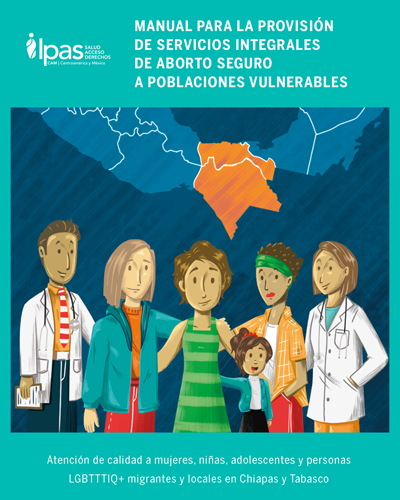
Manual that provides technical and theoretical tools legal, clinical and public health tools for multidisciplinary personnel to attend to the sexual and reproductive health – with special emphasis on safe abortion – of migrant women, girls, adolescents and LGBTTTIQ+ persons.This manual seeks to strengthen the mechanisms of care and access to health services, to reduce barriers and contribute to the fulfillment of the right to health care of migrants and those in need of international protection
Providing health services to survivors of sexual violence is an obligation! Learn what the General Health Law says and its standards on public health services and friendly services. See publication Back to Resources
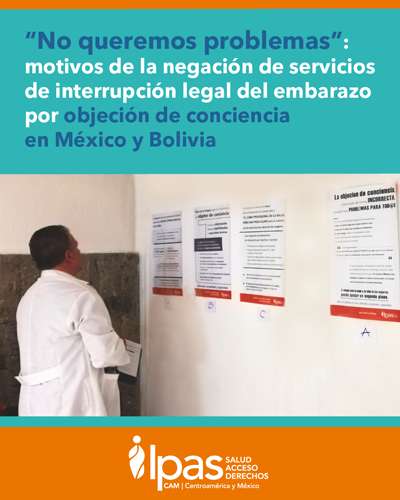
The Conscientious Objection is a major barrier to access to legal abortion services in many countries, especially in Latin American countries. In health facilities in Mexico and Bolivia, the denial of abortion services on the basis of Conscientious Objection is widespread and is used primarily for reasons other than moral, religious or ethical considerations. We examine the reasons for denial of legal abortion services in these countries and identify ways to mitigate the misuse of Conscientious

The purpose of this document is to describe the status of women’s sexual and reproductive rights in the countries where Ipas Central America and Mexico (Ipas CAM) works.In Mexico and Central American countries, girls, adolescents and adult women face adverse contexts for the exercise of their sexual and reproductive rights. The existence of institutional barriers to access to legal abortion services; the absolute criminalization of abortion; the criminalization of women during obstetric emergenc
Health and well-being: arguments for accessing legal abortion procedures in Mexico. This material is aimed at public and private sector health personnel, as well as medical and nursing students and trainees, to promote the effective implementation of abortion services for women’s health reasons. It includes information related to the legal framework, human rights standards and bioethical criteria applicable to determine its appropriateness.It is hoped that this information will enable informed d
Results of the survey of nearly 350 abortion providers and escorts from different countries on the impact of stigma on their lives. See publication in Spanish See publication in Spanish Back to Resources
Reproductive health decision making requires timely and accurate information. In this document we share data on El Salvador that can be considered in the elaboration of plans, programs, actions and for making public policy decisions in the area of reproductive health. See publication Back to Resources
One of the main barriers faced by adolescents and young people in Central America is the lack of scientific and stigma-free information and the existence of myths related to sexual reproductive health, which are reproduced in the family, school and community. These myths are often also present in some health services, which limits the access and use of contraceptive methods by adolescents and young people, the protected and informed exercise of their sexuality, and access to safe and lega
Since 1970, the Costa Rican Penal Code establishes that it is possible to terminate a pregnancy when the woman’s health or life is at risk. See publication Back to Resources

The myths linking abortion with negative consequences for women’s mental health have finally been debunked by health scientists around the world. See publication Back to Resources
The main objective of this document is to facilitate access to the criteria issued by the United Nations and the Inter-American Human Rights System on abortion through a user-friendly format for health care providers, decision makers involved in the implementation of sexual and reproductive health services and civil society organizations in El Salvador. See publication Back to Resources

Women resort to abortion for a wide variety of causes and reasons, including: sexual violence, lack of access to health services and modern contraceptive methods, difficulties in the correct and consistent use of contraceptives, method failures, and the very fact that many women, adolescents and girls, do not wish to become mothers at a certain point in their lives. See publication Back to Resources
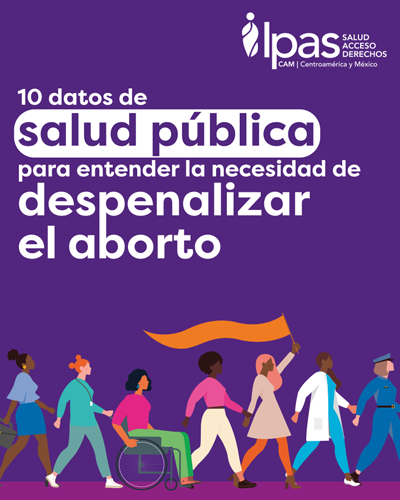
Abortion is a public health, social justice and human rights issue. Arguments based on scientific evidence show that decriminalization of abortion increases the number of safe procedures performed, decreasing the mortality and morbidity rate. Safe abortion also decreases the hospital burden and complication costs. Legal access to abortion benefits the health and lives of women and other persons with gestational capacity, as well as public health systems. See publication Back to Resources
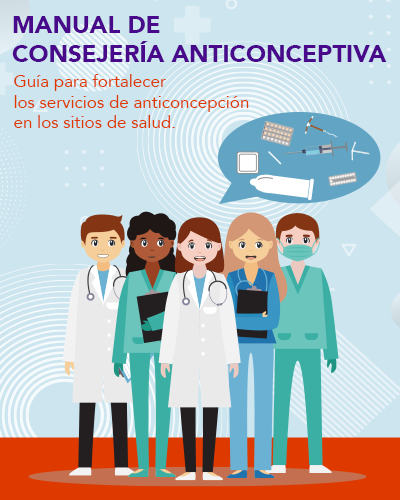
It is the health care provider’s responsibility to inform about contraceptive methods to prevent unwanted pregnancy in the short, medium or long term. Counseling is more than the provision of information; it involves a focused and interactive process whereby the service user receives voluntary support, as well as unbiased information and guidance on methods to avoid unwanted pregnancy. Individuals, including adolescents and young people, have the right to decide whether to use a contraceptive me
This book is a collective work that makes us reflect on the current situation of abortion in Mexico (in different regions) and in Latin America based on serious studies that measure realities.One of the issues that has always been present when discussing abortion is that of inequalities and privileged access for certain sectors of the population. The drug equalizes and makes it possible to reach the most vulnerable and disadvantaged sectors. This is not a minor point. In times of pandemic, it ha
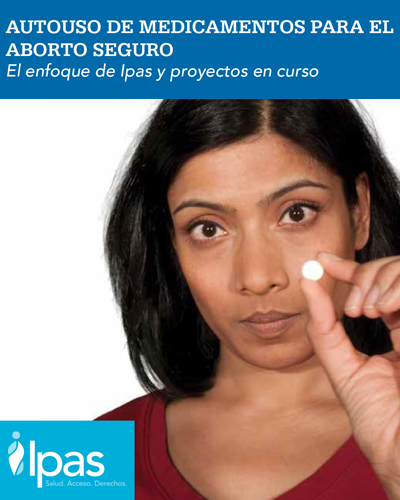
Reproductive health decision making requires timely and accurate information. In this document we share data on Ecuador that can be considered in the elaboration of plans, programs, actions and for making public policy decisions in the area of reproductive health. See publication Back to Resources

In this video you will find described information about: The safe abortion procedure with misoprostol Expected effects and warning signs that identify and can prevent emergencies Post-abortion care Evidence-based information on abortion self-management The information in this video is based on the latest World Health Organization (WHO) criteria and protocols. This video is for informational purposes only and is based on the most recent clinical evidence available and the legal framework in force

It is the task of parents, guardians and teachers to guarantee comprehensive sex education to adolescents and young people, using information based on scientific evidence and free of stigma. See publication Back to Resources
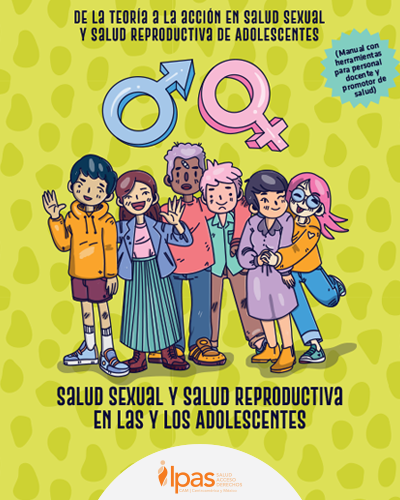
Toolkit for Teachers and Health Promoters on Sexual Health (SH) and Reproductive Health (RH), developed by the Ipas Central America and Mexico team to provide information and pedagogical tools to support teaching activities on various topics related to adolescent Sexual Health (SH) and Reproductive Health (RH).The objective is to contribute to the full development of their sexuality, one that is characterized by being healthy, free and informed, in addition to guaranteeing the exercise of the Se

Young people and adolescents have the right to grow up in contexts that favor the free development of their personality, receive sexual education and comprehensive health care. This will allow them to make free and informed decisions about their lives. Learn about Ana’s story and her inner voice. See publication Back to Resources
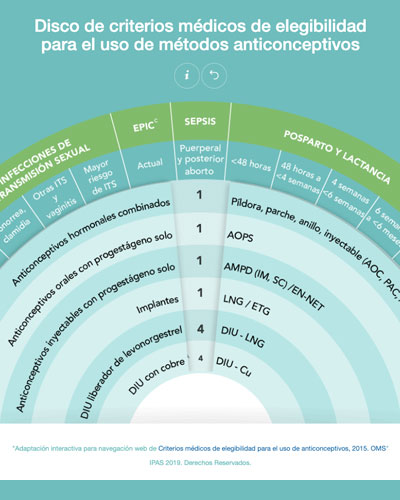
We have developed this interactive tool based on the criteria established by the World Health World Health Organization (WHO) to provide guidance on the correct use of the various contraceptive methods and to support family planning services. Go to tool Back to Resources
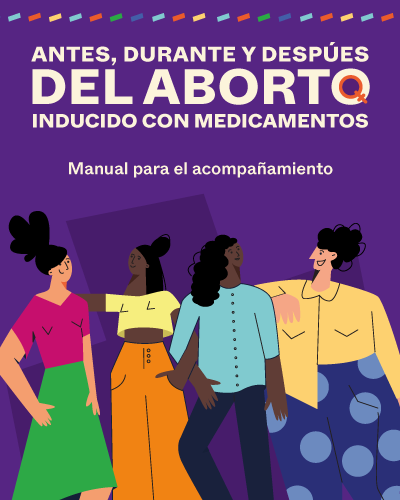
Package of publications intended to facilitate the accompaniment of women who are facing an unwanted or unwanted pregnancy. The package is divided into 3booklets that have relevant information about the option of terminating the pregnancy: before a medical abortion, during and after the procedure. We recommend using all 3 booklets and sharing the information with anyone who needs it. In addition, at the end of each booklet you will find a reference to some free digital resources that can facilit
Reproductive health decision making requires timely and accurate information. In this document we share data on Panama that can be considered in the elaboration of plans, programs, actions and for making public policy decisions in the area of reproductive health.
Author: Ipas CAM
Reproductive health decision making requires timely and accurate information. In this document we share data on Ecuador that can be considered in the elaboration of plans, programs, actions and for making public policy decisions in the area of reproductive health. See publication Back to Resources
Reproductive health decision making requires timely and accurate information. In this document we share data on Argentina, which can be considered in the elaboration of plans, programs and actions, and for making public policy decisions in the area of reproductive health.
Author: Ipas LAC
Reproductive health decision making requires timely and accurate information. In this document we share data on Ecuador that can be considered in the elaboration of plans, programs, actions and for making public policy decisions in the area of reproductive health. See publication Back to Resources

Reproductive health decision making requires timely and accurate information. In this document we share data on Honduras, which can be considered in the elaboration of plans, programs and actions, and for making public policy decisions in the area of reproductive health.
Author: Ipas LAC
Reproductive health decision making requires timely and accurate information. In this document we share data on Ecuador that can be considered in the elaboration of plans, programs, actions and for making public policy decisions in the area of reproductive health. See publication Back to Resources
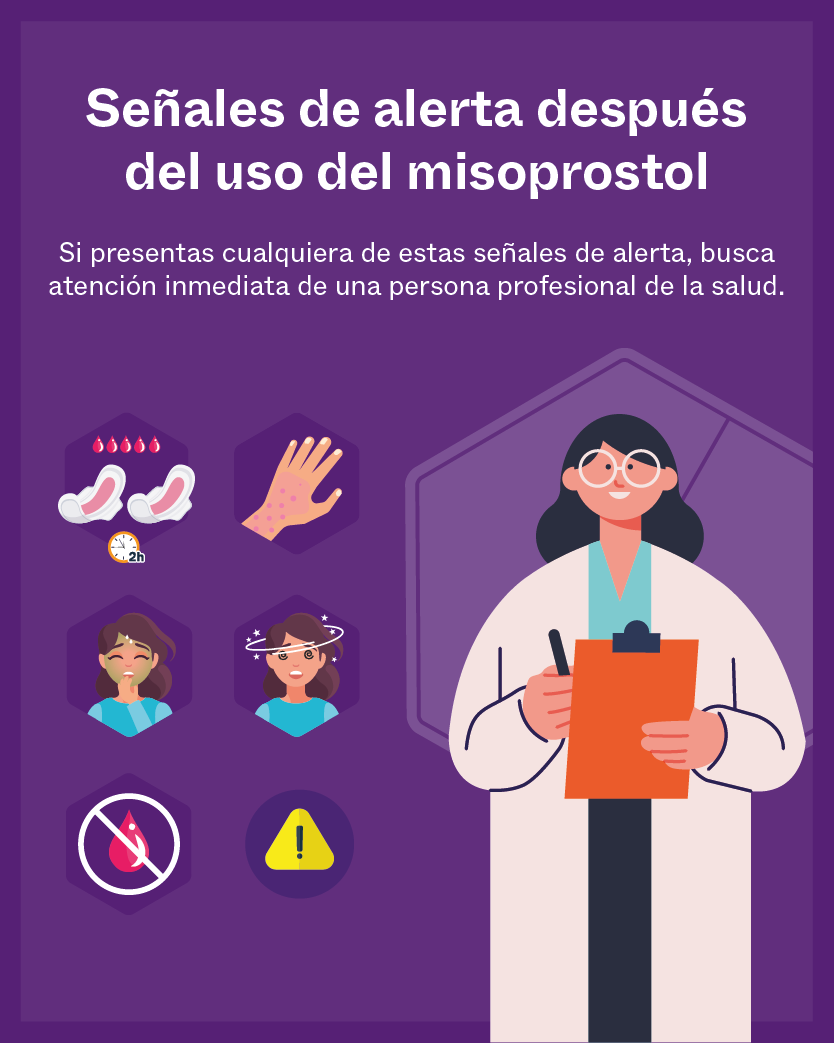
Abortion with misoprostol is one of the simplest and safest methods, however, it is true that there may be some warning signs that, although rare, require medical attention. In this material we show you how to identify them.
Author: Ipas LAC
Reproductive health decision making requires timely and accurate information. In this document we share data on Ecuador that can be considered in the elaboration of plans, programs, actions and for making public policy decisions in the area of reproductive health. See publication Back to Resources
The objective of this guide is to provide health professionals with a guide to abortion care that will enable them to provide high-quality, woman-centered services. It addresses quality of care within a human rights framework, presents technical information on uterine evacuation methods, and mentions the two types of counseling, abortion procedure-related counseling and postabortion contraceptive counseling. In addition, it provides information on the monitoring of abortion services, such as frequently used tools and service indicators.
Author: Ipas LAC
Reproductive health decision making requires timely and accurate information. In this document we share data on Ecuador that can be considered in the elaboration of plans, programs, actions and for making public policy decisions in the area of reproductive health. See publication Back to Resources

Abortion with misoprostol is one of the simplest and safest methods; however, it is true that it can have certain side effects. In this guide, we’ll explain what those side effects are and how you can manage them, as well as how to distinguish them from warning signs that require medical attention.
Author: Ipas LAC
Reproductive health decision making requires timely and accurate information. In this document we share data on Ecuador that can be considered in the elaboration of plans, programs, actions and for making public policy decisions in the area of reproductive health. See publication Back to Resources

Publication elaborated by CLACAI (Latin American Consortium against Unsafe Abortion) aimed at collectives, escorts and providers of abortion services in public or private health units, addresses attrition as a health problem.
Contains actions to mitigate and address this problem that affects the individual and collective health of escorts and providers, regardless of the normative-social context in which they find themselves.
Author: CLACAI
Publication prepared by CLACAI (Latin American Consortium against Unsafe Abortion) aimed at collectives, escorts and providers of abortion services in public or private health units, addresses attrition as a health problem.It contains actions to mitigate and address this problem that affects the individual and collective health of providers and providers, regardless of the normative-social context in which they find themselves. See publication Back to Resources
Reproductive health decision making requires timely and accurate information. In this document we share data on Chile, which can be considered in the elaboration of plans, programs and actions, and for making public policy decisions in the area of reproductive health.
Author: Ipas LAC
Reproductive health decision making requires timely and accurate information. In this document we share data on Ecuador that can be considered in the elaboration of plans, programs, actions and for making public policy decisions in the area of reproductive health. See publication Back to Resources

Crises, climate disasters and the consequent displacement of populations aggravate gender inequalities in access to health services and their outcomes, in addition to promoting sexual and gender-based violence against women. Humanitarian aid programs tend to prioritize access to food and shelter, leaving aside sexual and reproductive health needs.
Author: Ipas LAC
Reproductive health decision making requires timely and accurate information. In this document we share data on Ecuador that can be considered in the elaboration of plans, programs, actions and for making public policy decisions in the area of reproductive health. See publication Back to Resources

Reproductive health decision making requires timely and accurate information. In this document we share data on Colombia, which can be considered in the elaboration of plans, programs and actions, and for making public policy decisions in the area of reproductive health.
Author: Ipas LAC
Reproductive health decision making requires timely and accurate information. In this document we share data on Ecuador that can be considered in the elaboration of plans, programs, actions and for making public policy decisions in the area of reproductive health. See publication Back to Resources
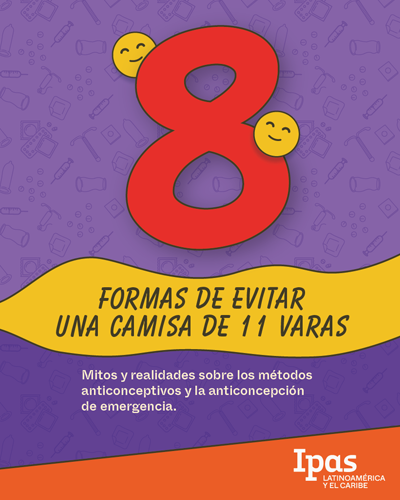
There is no ideal contraceptive method for all women and men. Each person decides, according to the stage of life they are in and their situation or state of health, which is the most appropriate contraceptive method. In this brochure you will find a summary of 8 alternatives to protect yourself, as well as some myths about contraceptive methods and their respective clarification.
Author: Ipas LAC
Reproductive health decision making requires timely and accurate information. In this document we share data on Ecuador that can be considered in the elaboration of plans, programs, actions and for making public policy decisions in the area of reproductive health. See publication Back to Resources
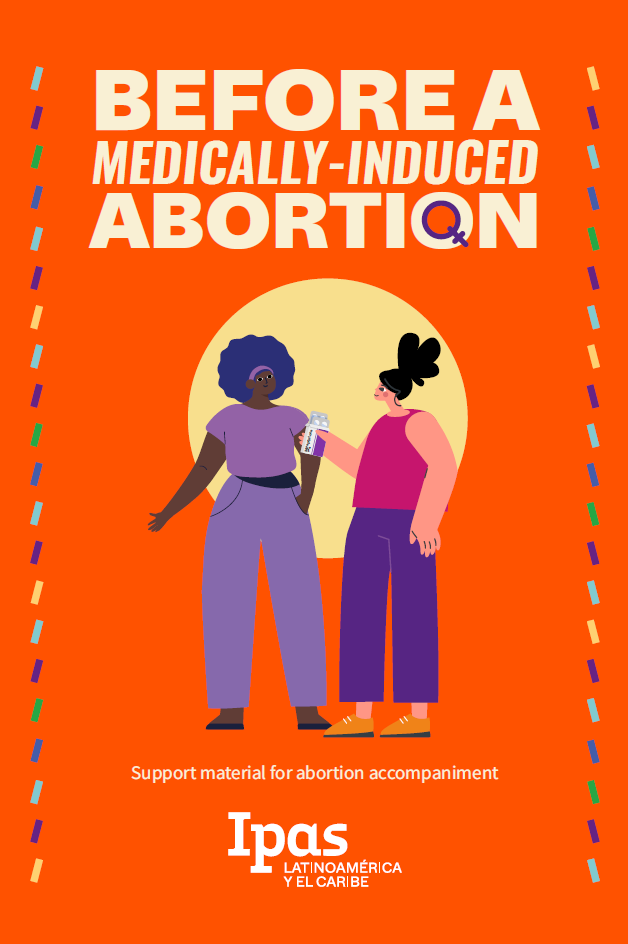
This booklet has information about abortion and self-management of medically-induced abortion.
The information found in this material will be useful if you accompany someone who is facing an unwanted or unintended pregnancy or if you find yourself in this situation.
Reproductive health decision making requires timely and accurate information. In this document we share data on Ecuador that can be considered in the elaboration of plans, programs, actions and for making public policy decisions in the area of reproductive health.
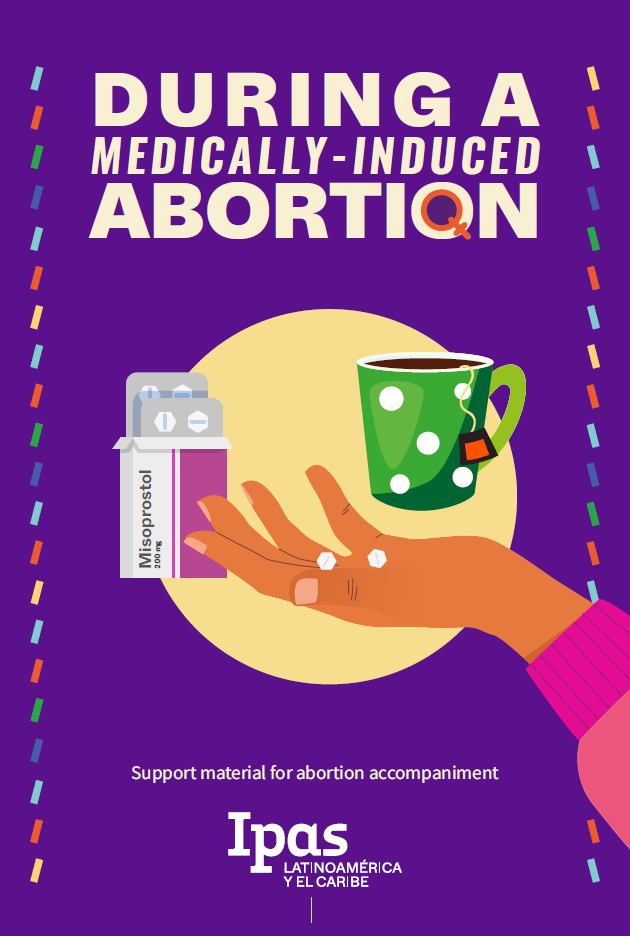
This booklet has information about abortion and selfmanagement of medically-induced abortion. The information in this material will be useful if you accompany someone who is facing an unwanted or unintended pregnancy, or if you find yourself in this situation.
Reproductive health decision making requires timely and accurate information. In this document we share data on Ecuador that can be considered in the elaboration of plans, programs, actions and for making public policy decisions in the area of reproductive health.
This booklet has information on medically-induced and self-managed postabortion care. The information in this material will be useful if you accompany someone who has undergone a medically-induced abortion procedure, or if you find yourself in this situation.
Reproductive health decision making requires timely and accurate information. In this document we share data on Ecuador that can be considered in the elaboration of plans, programs, actions and for making public policy decisions in the area of reproductive health.
WHO manual, published in English. It provides the necessary information to medical personnel about the whole procedure. Giving a detailed explanation for each situation; clinical considerations for abortion, laboratory analysis, abortion and its different modalities, pre and post-abortion. All this in order to keep the staff trained to achieve quality medical care.
Author: WHO
Reproductive health decision making requires timely and accurate information. In this document we share data on Ecuador that can be considered in the elaboration of plans, programs, actions and for making public policy decisions in the area of reproductive health. See publication Back to Resources
Sexual and reproductive health is fundamental and WHO aims to achieve the goal of providing technical assistance to countries in the area of health. In the updated WHO guidelines you will find the necessary information on abortion, information on the procedure (including induced abortion), and care related to pregnancy loss or miscarriage and post-abortion care.
Author: WHO
The objective of the guidelines is to present the complete set of all recommendations and best practice statements from the WHO regarding abortion. While the legal, regulatory, policy and service delivery framework may vary from country to country, the recommendations and best practices described in this document are intended to enable science-based decision making regarding quality abortion care. These guidelines are an update of the recommendations contained in the following previous guideline
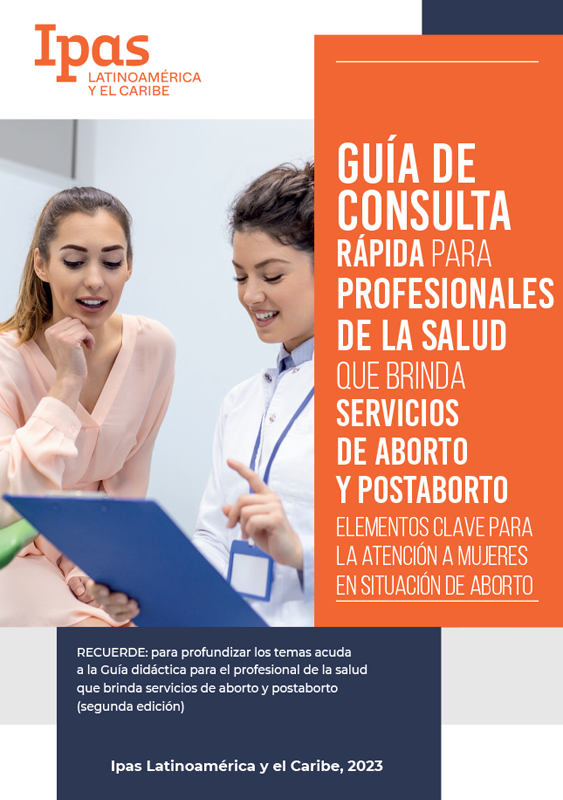
In this pocket guide you will find 3 topics fundamental to providing quality, evidence-based care to clients who require safe abortion; key information relevant to the process is cited for each topic.
- General framework for comprehensive woman-centered abortion and postabortion care
- Clinical methods for performing woman-centered abortion services
- Contraceptive counseling
Reproductive health decision making requires timely and accurate information. In this document we share data on Ecuador that can be considered in the elaboration of plans, programs, actions and for making public policy decisions in the area of reproductive health. See publication Back to Resources
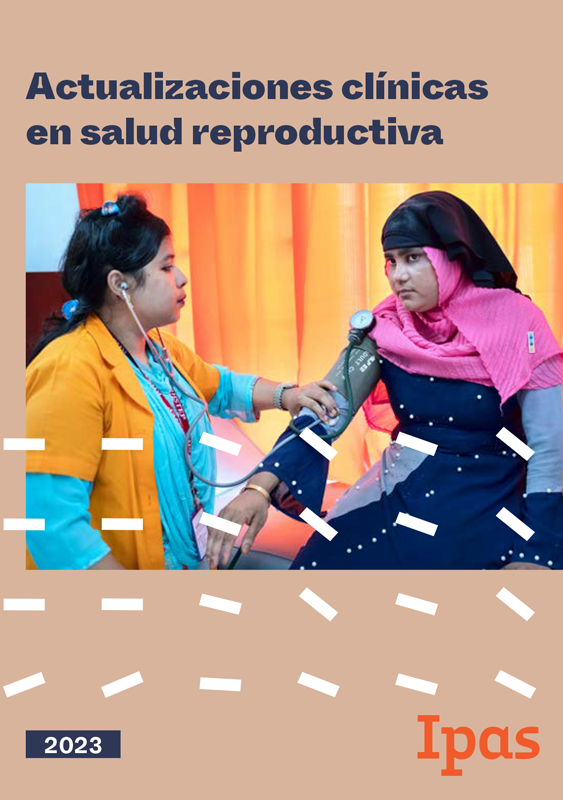
Ipas's Clinical Updates in Reproductive Health contains up-to-date, evidence-based clinical recommendations on comprehensive abortion care, as well as new topics and resources added regularly. Clinical Updates in Reproductive Health provides concise, easy-to-read information on abortion care, combining the latest evidence with lessons learned from health-care providers worldwide to produce relevant clinical recommendations.
Reproductive health decision making requires timely and accurate information. In this document we share data on Ecuador that can be considered in the elaboration of plans, programs, actions and for making public policy decisions in the area of reproductive health. See publication
Reproductive health decision making requires timely and accurate information. In this document we share data on Guatemala that can be considered in the elaboration of plans, programs, actions and public policy decisions in the area of reproductive health.
Author: Ipas LAC
Reproductive health decision making requires timely and accurate information. In this document we share data on Ecuador that can be considered in the elaboration of plans, programs, actions and for making public policy decisions in the area of reproductive health. See publication Back to Resources
The Argentine State filed a request for an Advisory Opinion before the IACHR Court in order for it to rule on the content and scope of care as a human right and its interrelation with other rights, in light of the American Convention on Human Rights and other international instruments.
By means of an advisory opinion, the Inter-American Court responds to inquiries from OAS Member States (or their organs) regarding the compatibility of domestic norms with the Convention and the interpretation of the Convention or other treaties concerning the protection of human rights in the American States.
Learn more about the right to care, its interrelation with other rights such as the right to self-care and reproductive autonomy, in this document.
The Argentine State filed a request for an Advisory Opinion before the IACHR Court in order for it to rule on the content and scope of care as a human right and its interrelation with other rights, in light of the American Convention on Human Rights and other international instruments. By means of an advisory opinion, the Inter-American Court responds to inquiries from OAS Member States (or their organs) regarding the compatibility of domestic norms with the Convention and the interpretation of
With an Advisory Opinion before the Inter-American Court of Human Rights, we seek the recognition of the right to care as a fundamental right.
See the infographic
It is not just a matter of caring, but of choosing to do so in freedom and respecting reproductive autonomy, without pressure, discrimination or violence. With an advisory opinion before the Inter-American Court of Human Rights, we seek recognition of the right to care as a fundamental right. An advisory opinion that recognizes the right to care See publication Care should be a fundamental right See publication Back to Resources

It is not just a matter of caring, but of choosing to do so in freedom and respecting reproductive autonomy, without pressure, discrimination or violence.it is not just a matter of caring, but of choosing to do so in freedom and respecting reproductive autonomy, without pressure, discrimination or violence.
Reproductive health decision making requires timely and accurate information. In this document we share data on Ecuador that can be considered in the elaboration of plans, programs, actions and for making public policy decisions in the area of reproductive health.
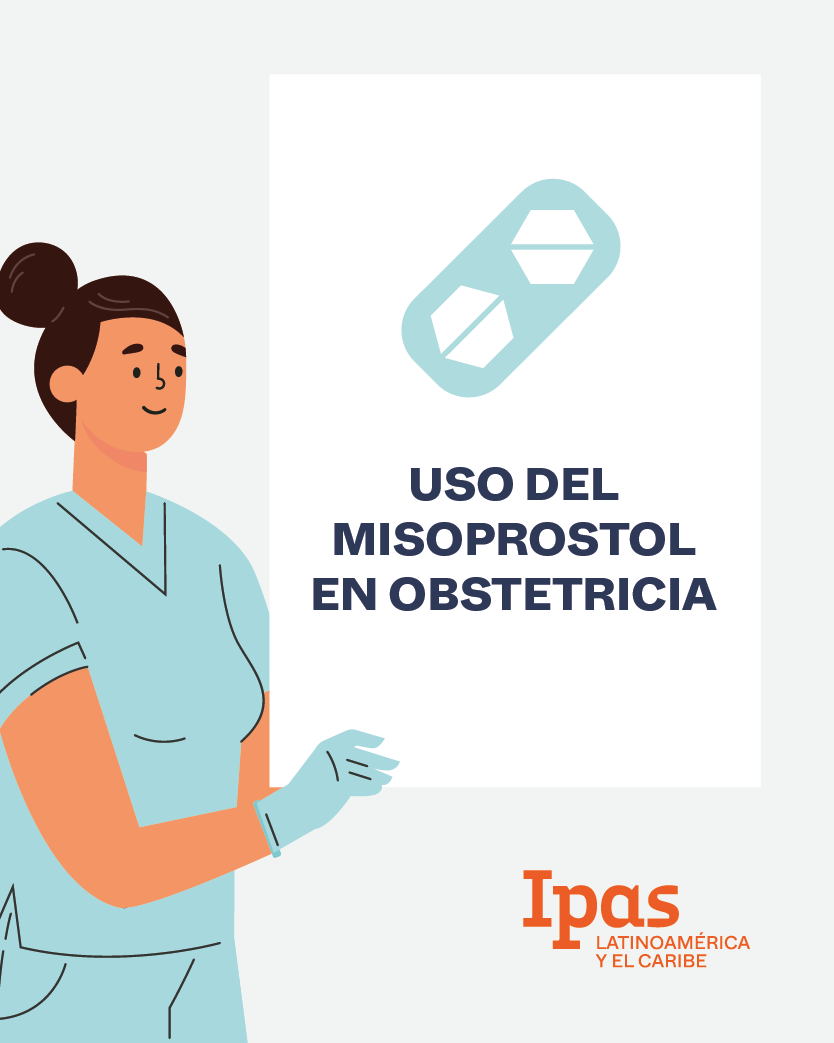
Fact sheet on the use of medications for safe abortion care in the misoprostol alone regimen and the combined regimen, misoprostol and mifepristone.
Fact sheet on the use of medications for safe abortion care in the misoprostol alone regimen and the combined regimen, misoprostol and mifepristone. Author: Ipas LAC See publication Back to Resources
The main objective of this document is to facilitate access to the criteria issued by the United Nations and the Inter-American Human Rights System on abortion through a user-friendly format for health care providers, decision makers involved in the implementation of sexual and reproductive health services and civil society organizations in El Salvador.
Reproductive health decision making requires timely and accurate information. In this document we share data on Ecuador that can be considered in the elaboration of plans, programs, actions and for making public policy decisions in the area of reproductive health.
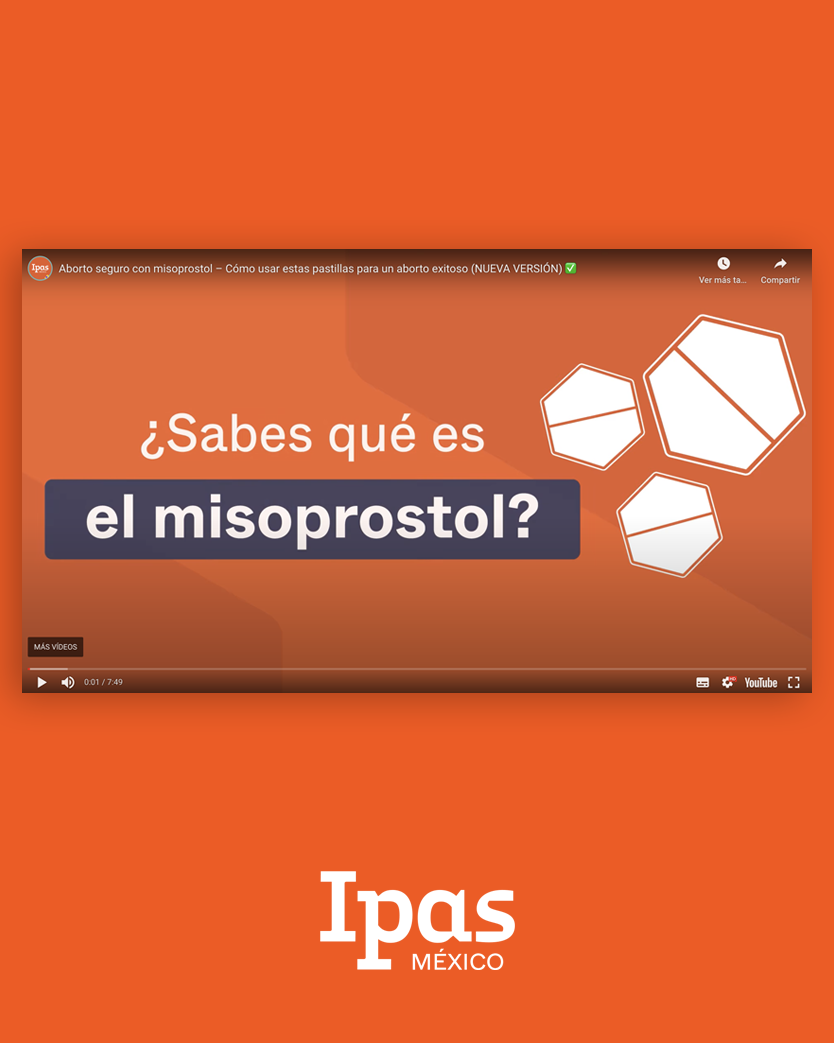
This video describes information on:
- The safe abortion procedure with misoprostol
- The expected effects and warning signs that identify and can prevent emergencies
- Postabortion care
- Evidence-based information on self-managed abortion
The information in this video is based on the latest World Health Organization (WHO) criteria and protocols.
In this video you will find described information about: – The safe abortion procedure with misoprostol – The expected effects and warning signs that identify and can prevent emergencies – Postabortion care – Evidence-based information on abortion self-management The information in this video is based on the most recent World Health Organization (WHO) criteria and protocols.
Reproductive health decision making requires timely and accurate information. In this document we share data on Ecuador that can be considered in the elaboration of plans, programs, actions and for making public policy decisions in the area of reproductive health.
Reproductive health decision making requires timely and accurate information. In this document we share data on Ecuador that can be considered in the elaboration of plans, programs, actions and for making public policy decisions in the area of reproductive health.