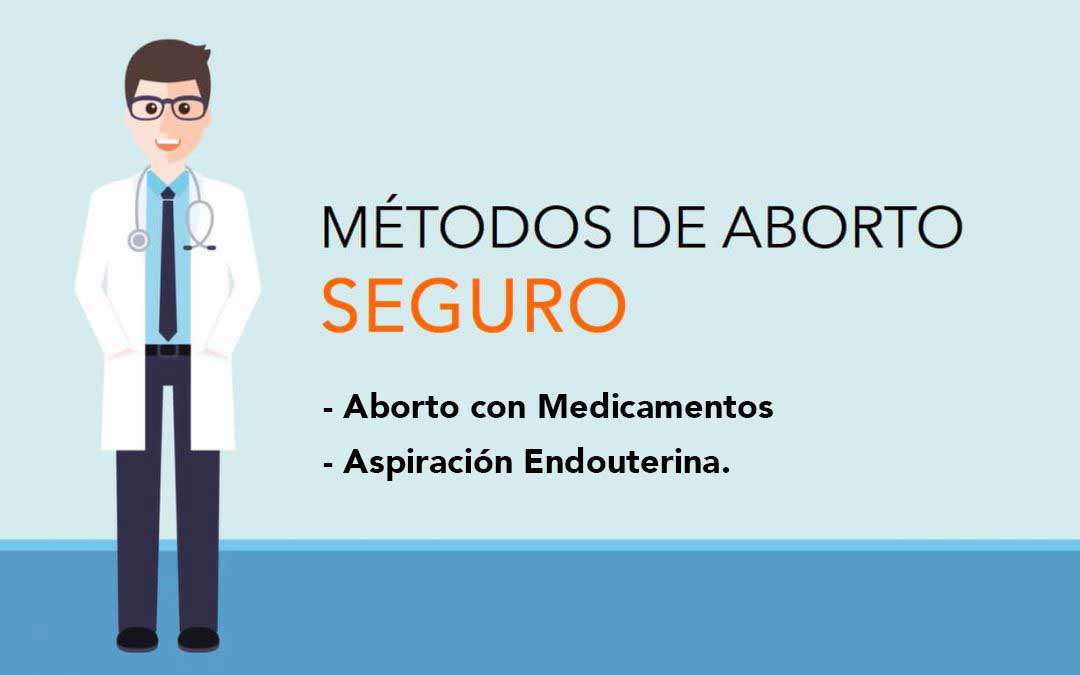
Both medical abortion and vacuum aspiration are methods endorsed and recommended by the World Health Organization (WHO) and the International Federation of Gynecobstetrics and Obstetrics (FIGO) for their safety and efficacy. Both procedures allow for the safe termination of unplanned or unwanted pregnancies, ensuring wellbeing, integral health and, in many cases, social justice.
When sufficient information and medications – including dosages – are used correctly, medical abortion is a safe and effective method of terminating a pregnancy, according to the World Health Organization.
1) Medical abortion
It is most effective when a drug called mifepristone is used in conjunction with another drug called misoprostol (known as a combined regimen). When mifepristone is not available, as is the case in some countries, the procedure can be performed with misoprostol alone (called a misoprostol-only regimen), which is a safe, although slightly less effective option for terminating a pregnancy.
The misoprostol-only regimen is 84% to 93% effective. While the combined regimen of mifepristone and misoprostol has efficacy rates above 95 %.
Among its advantages, it is a non-invasive procedure that can be used at home. It is intimate and safe, you can decide whether to perform it alone or in company during the whole process or in some of its phases.
2) Vacuum suction
It is one of the first choice procedures recommended by the World Health Organization and the International Federation of Gynecobstetrics and Obstetrics, as it is a modern, versatile, safe, effective and painless technique to remove the contents of the uterus. Uterine evacuation is performed by means of a vacuum aspiration device, which can be manual or electric, with a design similar to that of a syringe.
Here you can learn more: What is Manual Vacuum Aspiration, known as MVA?
This method has an efficacy of more than 98% and less than 1% of serious complications.
Among its advantages, it is an outpatient procedure, that is, it does not require hospitalization or admission to the operating room, it does not require general anesthesia and it concludes once the clinical maneuver is finished. It is important for you to know that it must be performed by trained personnel, including professionals in general medicine, gynecobstetrics, nursing or midwifery.
On the other hand, both methods are recommended to replace the Instrumental Intrauterine Curettage (IUCD ) or uterine curettage, since this is no longer a procedure recommended by the WHO, due to the complications it may present.
Are you a health professional?
If you would like to learn more about recommended dosages for providing a safe medical abortion procedure or learn more about Manual Vacuum Aspiration (MVA), please access our materials created for healthcare professionals to guide clinical practice and ensure safe procedures for women and individuals who are able to gestate.
In this video you will learn from an expert about the advantages of MVA over LUI. If you are interested in learning more about safe and legal abortion, we invite you to visit our website for health professionals: https://profesionalesdelasalud.ipaslac.org/.