
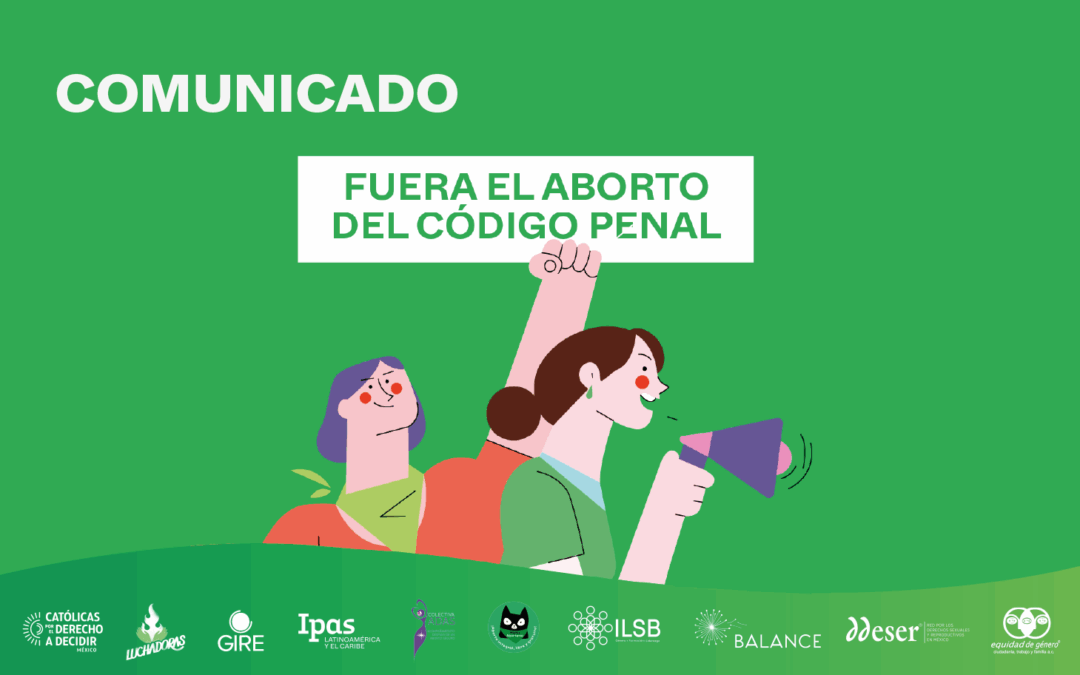
- The signatory organizations rejected any form of criminalization of those who have abortions, those who accompany them, or medical personnel.
- Ending the use of criminal law is essential to guarantee full and safe access to this health service.
September 28, 2025, Mexico City. Feminist organizations and human rights collectives called for a “sound system event for legal, safe and free abortion” outside the Senate and demanded that the Congress of the Union comply with the Supreme Court of Justice of the Nation (SCJN) ruling, which in September 2023 declared the absolute criminalization of abortion in the Federal Criminal Code unconstitutional.
The highest court ruled on amparo review 267/2023 and determined that penalizing voluntary abortion violates the human rights of women and pregnant people. The SCJN ordered the Legislative Branch to reform criminal legislation to repeal the offense; however, to date, the mandate has not been carried out.
Currently, 23 states have made progress toward partially decriminalizing abortion—an advance that should be celebrated, as it represents a step toward recognizing reproductive rights. However, in nine states—Aguascalientes, Durango, Morelos, Guanajuato, Nuevo León, Sonora, Querétaro, Tamaulipas and Tlaxcala—voluntary termination of pregnancy continues to be considered a crime.
From the perspective of international bodies and the Court itself, abortion should not be regulated through criminal laws, but through health regulations that guarantee safe access, without time limits or third-party authorizations, and under conditions of dignity, equality and affordability.
The signatory organizations rejected any form of criminalization of those who have abortions, those who accompany them, or medical personnel, as they consider that legalizing this practice removes barriers and provides legal certainty for those involved in the procedures. “Ending the use of criminal law is essential to guarantee full and safe access to this health service,” they stated.
They also called for incorporating an accessibility perspective into abortion services for people with disabilities, underscoring that the Mexican State has an obligation to ensure the right to decide under conditions of justice, equality and non-discrimination.

Recent Comments