
The United Nations Population Fund 2025 (UNFPA) report analyzes the global situation of reproductive freedom and argues that the real demographic crisis lies not only in fertility rates, but in the inability of many people to decide freely about their reproduction. Millions of people around the world are unable to have the number of children they want or are unable to avoid unplanned pregnancies due to social, economic and health care access constraints.
One of the most relevant findings is that almost half of pregnancies worldwide are unintended (i.e., unplanned and unwanted pregnancies), which is evidence of structural failures in access to information, sex education and effective contraceptive methods. In addition, the report indicates that approximately one in ten women cannot decide whether or not to use contraceptives, reflecting persistent inequalities in reproductive rights.
The document emphasizes that reproductive autonomy implies the ability to make free and informed decisions about sexuality, contraceptive use and the timing of childbearing. This autonomy is part of fundamental human rights, linked to gender equality, bodily autonomy and social well-being.
There are several factors that limit the exercise of reproductive rights, among them:
- Gender inequalities and restrictive social norms.
- Lack of access to quality sexual and reproductive health services.
- Insufficient availability of modern contraceptive methods.
- Economic and geographic barriers to access family planning services.
- Lack of social and institutional support for parenting and family life.
Ensuring universal access to safe, affordable, quality contraceptive methods is essential to prevent unintended pregnancies, reduce risks to maternal health, and enable people to plan their reproductive lives according to their wishes and circumstances.
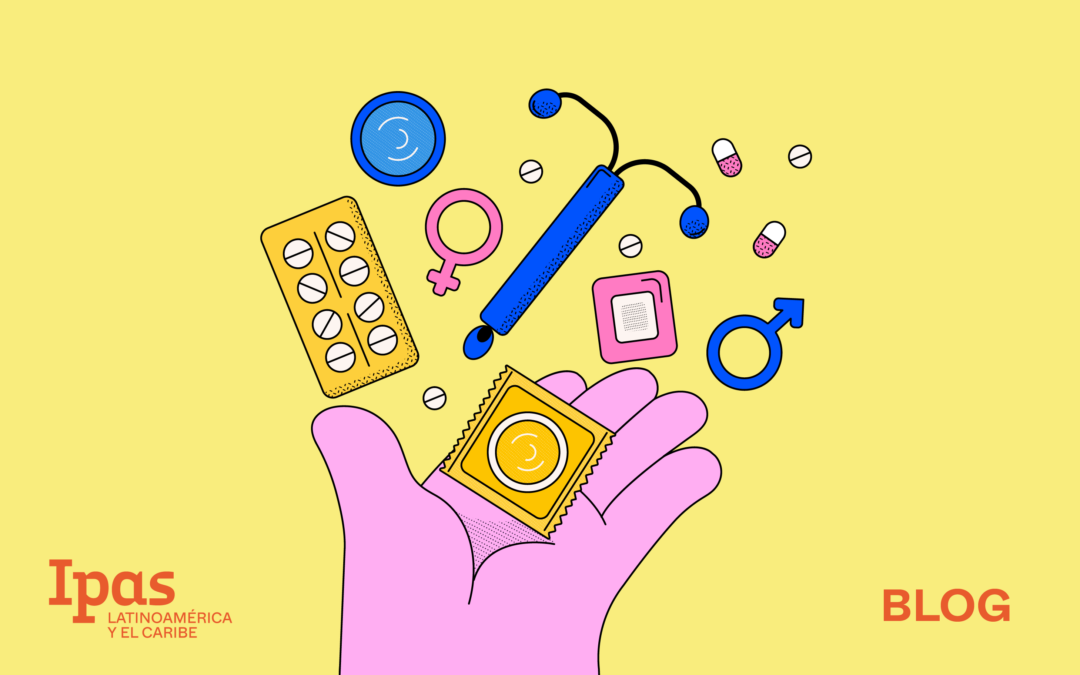
In view of the above, it is necessary to know the different contraceptive methods that exist:
Among the most effective methods are:
-
- Permanent methods:
- Bilateral Tubal Occlusion or also called tubal ligation, for those bodies that have a female reproductive system.
- And vasectomy, for bodies with a male reproductive system.
- Hormonal methods:
- Contraceptive pills
- Monthly and quarterly injections
- Hormonal IUDs
- Subdermal patches
- Subdermal implant
- Emergency methods:
- Oral Emergency Contraceptive (OEC), also known as the emergency or morning-after pill.
- The IUD can also be used as an emergency contraceptive.
- Barrier methods: Their constant and correct use allows a double protection, that is to say, they prevent unplanned pregnancy and Sexually Transmitted Infections (STI):
- External condom (for bodies with male sexual organs)
- Internal condom (for bodies with female sexual organs)
- Permanent methods:
Among the least effective methods we can mention the “rhythm method”, as well as the
coitus interruptus called “natural methods”; neither of them is recognized as a modern contraceptive method and have a low effectiveness.
Remember that informed access to contraceptive methods is a human right.
For more information on the different contraceptive methods we invite you to review the Contraceptive Methods Accordion .
Recent Comments