
To have an abortion is to decide. When you decide to terminate your pregnancy, you exercise your right to choose your body, your life and your future; and you can also choose how to do it, that is, the method you prefer, as well as where and when you want to live this process.
Among the many myths surrounding abortion is the idea that it can only be performed in a hospital, in a surgical and invasive way, where the person will be alone; however, this type of procedure is occurring less and less frequently in the world.
The World Health Organization (WHO) recommends pharmacological treatment as the first choice for safe abortion; either using misoprostol alone or the combined regimen of mifepristone and misoprostol.
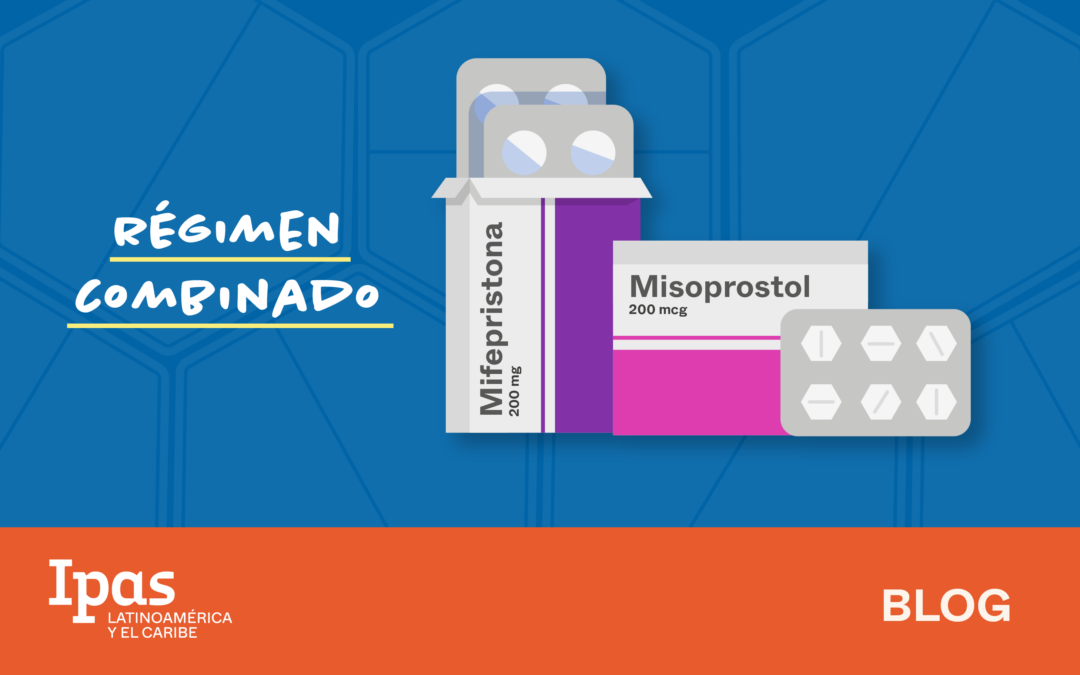
In this space we will discuss the combined regimen of mifepristone and misoprostol. This option is more effective than misoprostol alone, and is recommended for medical abortion before 13 weeks gestation.
This regimen has efficacy rates of over 95%, continuation of pregnancy rates of approximately 2% and complication rates of 1% to 3%.
Another advantage of the combined regimen is that, by using both drugs, expulsion occurs more quickly. The average interval to completion of the abortion is 6 to 10 hours after starting misoprostol, although some people need more time to achieve a complete abortion. After completion of the procedure, no routine follow-up consultation is necessary.
The only difficulty in performing an abortion using both drugs is that mifepristone is not available in several countries in the region.
In the case of abortion with mifepristone and misoprostol, before 13 weeks, these three steps must be followed:
- Step 1: Swallow one mifepristone tablet (200 mg) with water.
- Step 2: Wait 1 – 2 days (we recommend 24 hours) before administering misoprostol pills.
- Step 3: Place 4 misoprostol tablets (200 mcg each) either under the tongue (sublingual route) or between the cheeks and gums, two tablets on each side (this route is called buccal); let them dissolve on their own, wait 30 minutes and swallow the residue with water.
- You can also use the vaginal route for misoprostol (some countries have this presentation). The tablets are introduced into the vagina with your fingers, as deep as possible, then you must remain in a horizontal position for 30 minutes until the tablet melts.
- In the vaginal tract, residues of the pills can be detected even several hours later. It is not recommended to put misoprostol in the vagina if you live in a place where abortion is legally restricted, since you may be questioned if you go to a medical facility for a check-up.
If you are over 13 weeks, it is advisable to perform the procedure under the supervision of a health care professional properly trained in abortion care, as you may require more doses of the medication.
Having the correct dosage of the combined medication is vital for a safe and successful procedure. Another key aspect is that you have complete information and full preparation.
Although complications are minimal, you should be alert to warning signs and seek immediate care from a health care professional appropriately trained in abortion and postabortion care if you experience:
- Excessive and continuous bleeding, especially if you are soaking 2 or more maxi pads, or equivalent, every hour for 2 or more hours.
- Severe pain in the belly that does not go away with pain medication (this may be an ectopic pregnancy, considered a medical emergency).
- Unusual and foul-smelling discharge from the vagina.
- High fever lasting more than one day.
- If you experience severe dizziness or fainting.
- Allergic reaction to the drug in the form of hives or rash.
- If you took the abortion medications and have not bled within 24 hours of the last intake.
- Even if abortion is legally restricted where you are, emergency medical care is always legal. You do not have to report that you have taken abortion medication if you do not want to; you can say that you are having a miscarriage, as the subsequent treatment does not change.
Although the medical abortion experience will be different for each person, it can be painful in some cases. Cramping pain in the belly is usually more severe than a menstrual period and is a good sign that the medication is working. The further along in the pregnancy, the more painful the process can be.
To reduce pain, you can take ibuprofen or other available non-steroidal anti-inflammatory drugs (if you are not allergic) about 30 minutes before your first dose of misoprostol. It may also help to place a hot water bottle on your belly.
Recent Comments